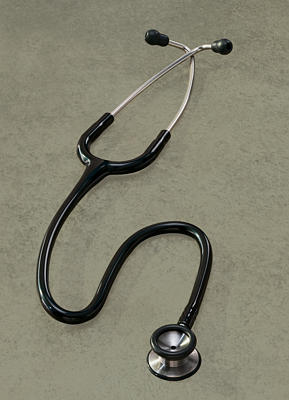
 Littman
Parts and Accessories, Littmann
Stethoscopes, Heart Sounds,
Littman
Parts and Accessories, Littmann
Stethoscopes, Heart Sounds,Littmann Classic II Pediatric
$ 176.00 $
82.00
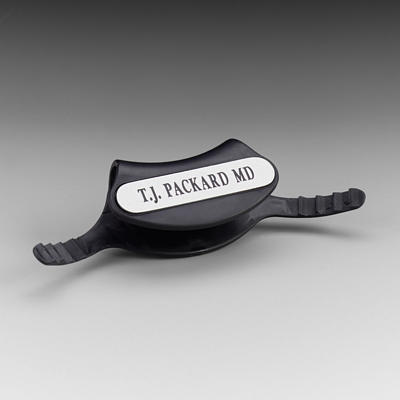 3M™
Littmann® Stethoscope Identification Tags ($7.99
3M™
Littmann® Stethoscope Identification Tags ($7.99
| 2170 Stethoscope Identification Tag, fits all sizes - Black. |
| 2171 Stethoscope Identification Tag, fits all sizes - Gray. |
Using Your 3M™ Littmann™ Classic II SE Pediatric
Stethoscope
with patented tunable diaphragm
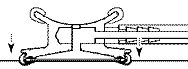
Tunable technology provides convenience, versatility and enhanced acoustics. Its dual-frequency diaphragm combines both bell (low-frequency) and diaphragm (high-frequency) modes in one chestpiece side. You control bell and diaphragm modes by pressure on the chestpiece rather than turning it over.
| Bell Mode (low-frequency) Light contact with chestpiece allows you to hear low-frequency sounds. |
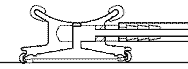 |
| Diaphragm Mode (high-frequency) Without turning the chestpiece over, use firm pressure to hear high-frequency sounds. |
 |
  A2Z Medical
 |
| Copyright © 1998-2009 a2zmed.com., All Rights Reserved TEL(804) 378-0077 FAX(804) 378-0997 |
| Use of this site indicates that you accept Terms and conditions, |
| Terms of Use and Privacy Policy of www.a2zmed.com |
| Send mail to sales@a2zmed.com with questions or comments about this web site. Last modified: 01/06/2009 |